Before he planted a single vine on Kent Island, Mark Cascia built satellites. The Connecticut farm kid turned aerospace engineer had spent years working on NASA missions when an aerospace company sent him to France, a move that would later change his career trajectory.
Weekends spent wandering wine regions from Bordeaux to Spain rekindled his agricultural roots and sparked a desire to make his own wine. It also cemented his belief in an old French adage: “All good wine-growing regions must see water.” So, he looked for it—in Maryland.
By Kelsey Casselbury
April 2026
From Sweet to Serious
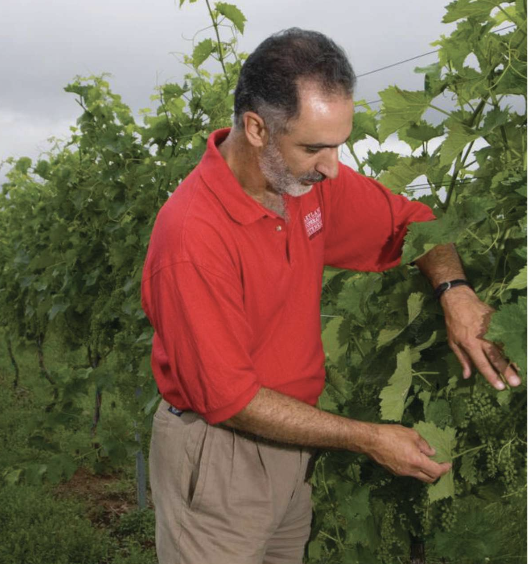
“Geologically and climatically, we have some of the best conditions in the eastern U.S. to grow quality wines,” says Joseph Fiola, PhD, a professor at University of Maryland Extension and the state’s viticulturalist. “With what we have learned about growing fine wine under our conditions in the last 30 years or so, we have made great strides and are already producing wines that compete on the world stage.”
Maryland’s wine story stretches back centuries, with the first recorded production dating to 1648. Thirteen years later, Governor Charles Calvert planted 200 acres of European grapevines along the east bank of the St. Mary’s River—an ambitious early effort to establish viticulture in the colony.
The leap from colonial experiment to commercial winemaking took much longer. The state’s first winery, Boordy Vineyards, opened in Baltimore in 1945 before relocating to Hydes in 1980. That milestone marked the beginning, but it would take decades for a true industry to take hold.
“Grape-growing and winemaking in Maryland has blossomed,” says Judy Crow of Crow Vineyard and Winery in Kennedyville, but “it is still considered new and growing.”
For a long time, Maryland vineyards have been thought to produce mediocre bottles, much too sweet to be taken seriously. Despite decades of steady progress in the vineyard and cellar, that reputation lingers, even if it no longer reflects what’s in the glass.